Beyond the Chatbot: The Strategic Shift to Relational Foundation Models
For two years, enterprise AI strategy has been synonymous with the chatbot. But as the novelty of conversational interfaces fades, a critical limitation has emerged: Large Language Models (LLMs) are masters of prose but amateurs at business logic. To bridge the gap between "talking about work" and "doing the work," the next phase of transformation is moving toward Relational Foundation Models (RFMs) that prioritise the structured, deterministic world of the database over the probabilistic world of the word.
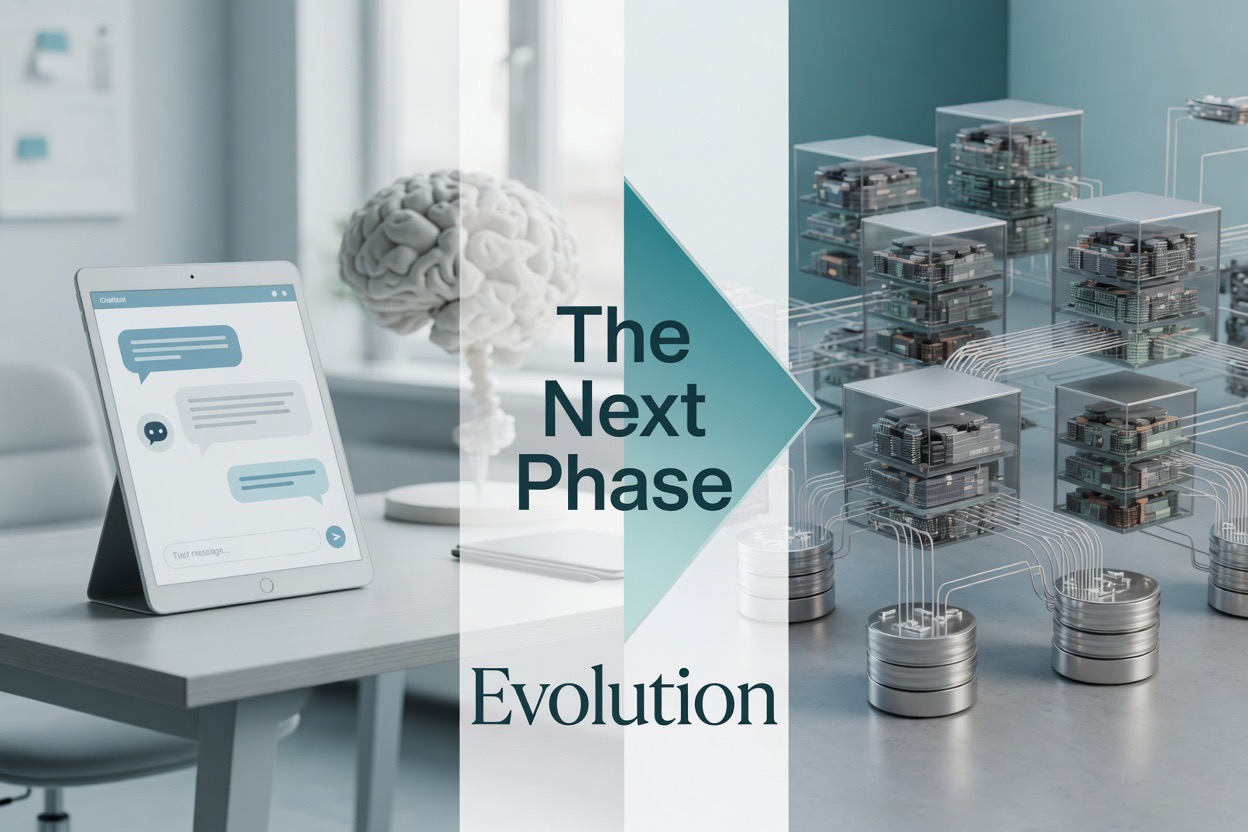
The Chatbot Plateau
The initial wave of Generative AI was a triumph of accessibility. Tools like ChatGPT gave every employee a sophisticated drafting partner. However, for the C-suite, the ROI has been uneven. While productivity in content creation soared, core business operations — supply chain optimisation, financial forecasting, and real-time inventory management — remained largely untouched.
The reason is structural. LLMs are trained on the statistical likelihood of the next word in a sentence. Enterprise operations, however, run on the deterministic relationship between tables in a database. When you ask a chatbot to "analyse Q1 churn," it interprets the language of your request, but it often guesses at the logic of your data. This leads to the "Hallucination Gap," where AI provides a confident answer that is mathematically impossible.
From Prosaic AI to Relational Reasoning
The strategic pivot of 2026 is the rise of the Relational Foundation Model (RFM). Unlike its predecessor, the RFM is not trained on the internet's library of text. Instead, it is trained on the structural patterns of relational data — the complex web of foreign keys, dependencies, and transactions that define a modern ERP or CRM system.
Where an LLM sees a "Customer," an RFM sees a multidimensional entity connected to five years of payment history, three active support tickets, and a fluctuating regional supply chain. By treating the database schema itself as a language, these models can reason across hundreds of tables simultaneously.
Best-in-Class Models: The 2026 Landscape
The market has matured into specialised tools that outperform general-purpose LLMs in structured environments.
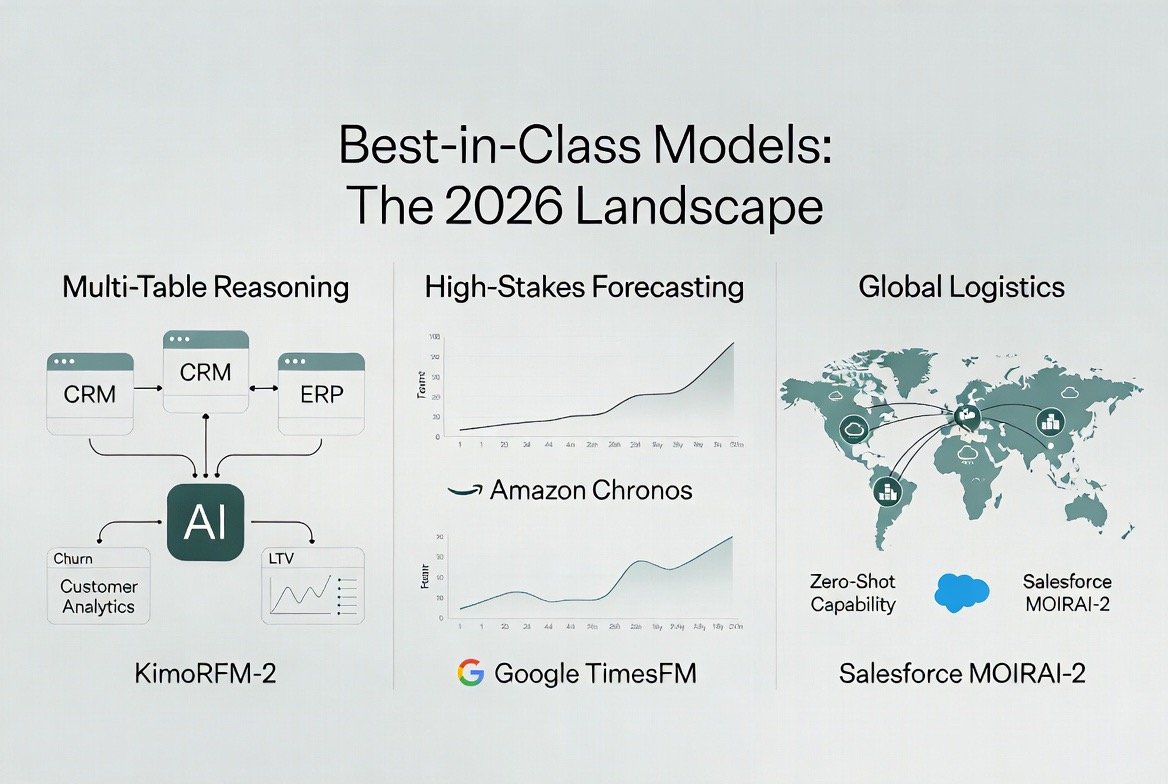
- Multi-Table Reasoning: KimoRFM-2 has emerged as the gold standard for predicting customer behaviour (churn, LTV) by connecting disparate CRM and ERP tables without requiring manual data flattening.
- High-Stakes Forecasting: Amazon Chronos and Google TimesFM lead the field. These models use "zero-shot" capabilities, meaning they can provide accurate supply chain or financial forecasts on new datasets without needing months of historical training.
- Global Logistics: Salesforce MOIRAI-2 is the benchmark for multivariate demand planning, capable of processing trillions of observations across global weather, sales, and logistics data.
Implementation: A Tale of Three Strategies
Deploying these models requires a fundamental departure from the "plug-and-play" nature of chatbots. Success depends on how the model is integrated into your existing data stack.
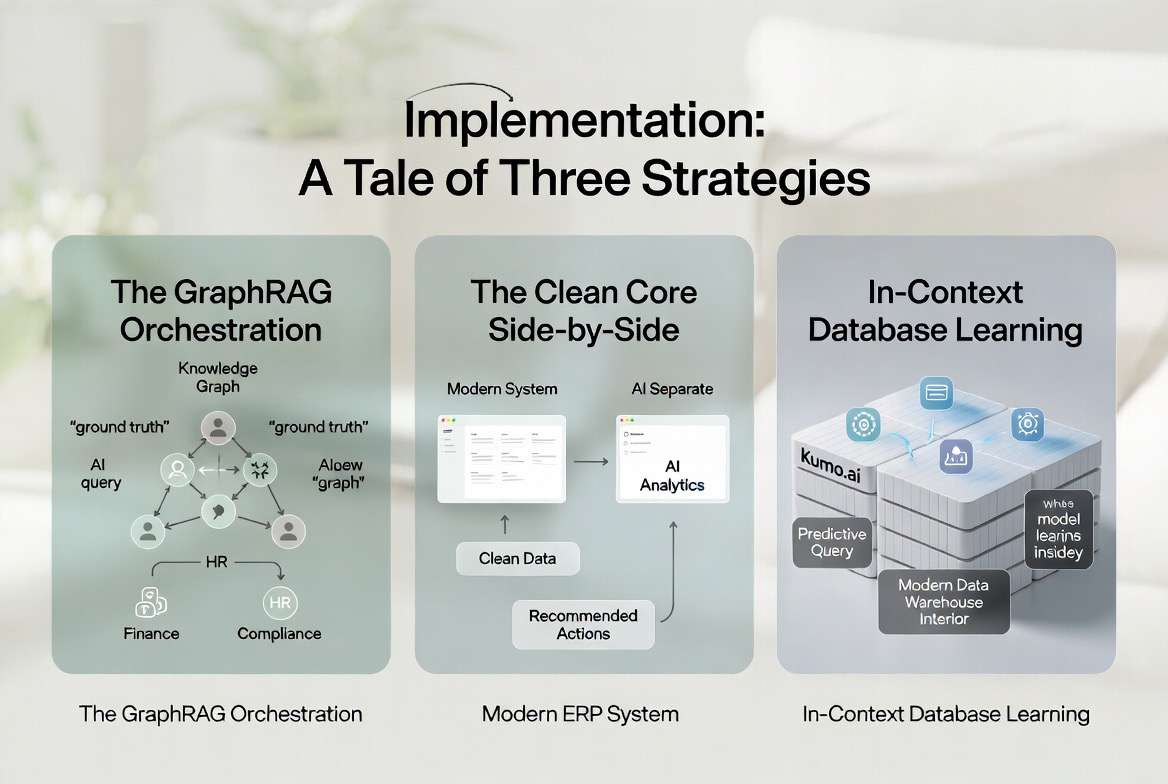
- The "GraphRAG" Orchestration: Instead of hoping an LLM understands your business, you use a Knowledge Graph (like Neo4j or Atlan) to map your entities. The AI first queries the graph to find the "ground truth" relationships before generating a response. This is the primary strategy for highly regulated industries like finance or HR where auditability is non-negotiable.
- The "Clean Core" Side-by-Side: For organisations running heavy ERPs (SAP, Oracle), the trend is the "Side-by-Side" architecture. The core operational system remains "clean" (unmodified), while data is streamed via a platform like Azure Fabric to a separate AI core. The RFM analyses data in the cloud and pushes "Recommended Actions" back to the user, ensuring the core system remains stable.
- In-Context Database Learning: The most efficient implementation involves "In-Place" learning within Snowflake or Databricks. Using models like Kumo.ai, data scientists can run predictive queries directly on the warehouse. The model learns patterns across tables natively, eliminating the need to move massive amounts of sensitive data.
The Strategic Mandate
For leaders, the "Next Act" requires a shift in investment. The goal is no longer to give every employee a chatbot; it is to give every database a "brain."
This requires a focus on the Clean Core — ensuring data is governed by a unified semantic layer. In the era of Relational AI, your competitive advantage will not be the model you buy, but the clarity and connectivity of the data you feed it. The era of the "talking AI" is ending; the era of the "reasoning enterprise" has begun.
All articles on this site are written by me. I use AI to assist with final formatting and editing before publication.